Français

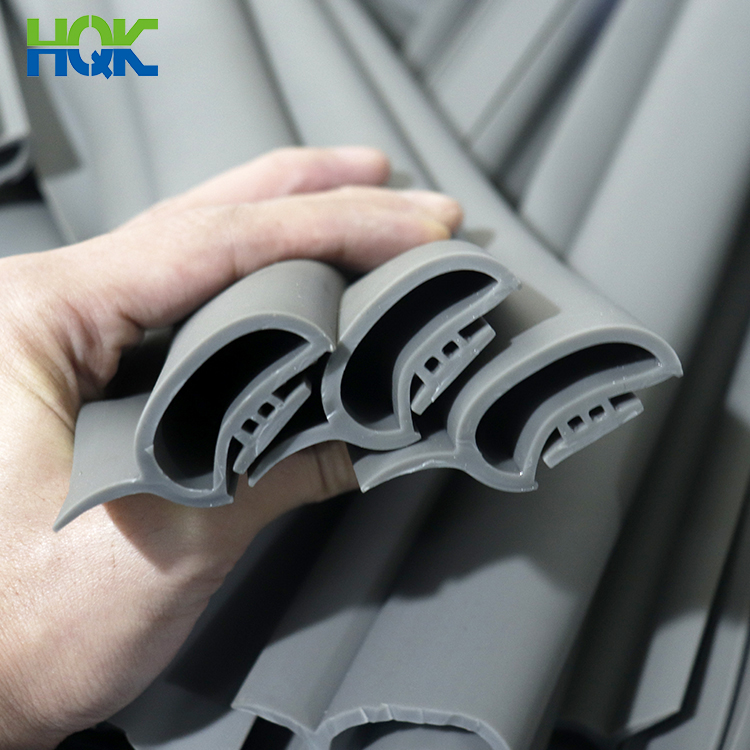
As the relative molecular mass increases, the force between the components increases, the cohesion of the rubber material increases, the chain segments are not easy to slide when stretching, so the tensile strength generally increases with the relative molecular mass. But the relative molecular mass on the tensile strength of the impact has a certain limit. When the relative molecular mass is the same, the relative molecular mass distribution of rubber tensile strength of the narrower degree of improvement than the relative molecular mass distribution of the broader degree.
In addition to the above relative molecular mass and relative molecular mass distribution will affect the intermolecular force, all other factors that affect the intermolecular force, have an effect on the tensile strength. For example, polar rubber, intermolecular valence greatly increased, tensile strength is also increased. Generally with the improvement of rubber crystallinity, tensile strength increases. For crystalline rubber, under the conditions of stretching will produce stress and induce the formation of crystallisation, and subsequently enhance the intermolecular action, and can prevent the growth of cracks, so that the tensile strength is greatly improved. When rubber is stretched, the macromolecular chains are orientated in the direction of stress to form crystals. These crystals are dispersed in the amorphous macromolecules, playing a reinforcing role, the so-called self-reinforcing effect. For example, natural rubber and neoprene rubber is belong to the raw rubber strength (Green strength) higher self-reinforcing effect of rubber.
Polymer molecular orientation, its performance will be changed from isotropic to anisotropic. After the orientation of the molecular chain, and the molecular chain parallel to the direction of the tensile strength increases, and with the molecular chain perpendicular to the direction of the strength decreases.
In addition to the above relative molecular mass and relative molecular mass distribution will affect the intermolecular force, all other factors that affect the intermolecular force, have an effect on the tensile strength. For example, polar rubber, intermolecular valence greatly increased, tensile strength is also increased. Generally with the improvement of rubber crystallinity, tensile strength increases. For crystalline rubber, under the conditions of stretching will produce stress and induce the formation of crystallisation, and subsequently enhance the intermolecular action, and can prevent the growth of cracks, so that the tensile strength is greatly improved. When rubber is stretched, the macromolecular chains are orientated in the direction of stress to form crystals. These crystals are dispersed in the amorphous macromolecules, playing a reinforcing role, the so-called self-reinforcing effect. For example, natural rubber and neoprene rubber is belong to the raw rubber strength (Green strength) higher self-reinforcing effect of rubber.
Polymer molecular orientation, its performance will be changed from isotropic to anisotropic. After the orientation of the molecular chain, and the molecular chain parallel to the direction of the tensile strength increases, and with the molecular chain perpendicular to the direction of the strength decreases.