Français

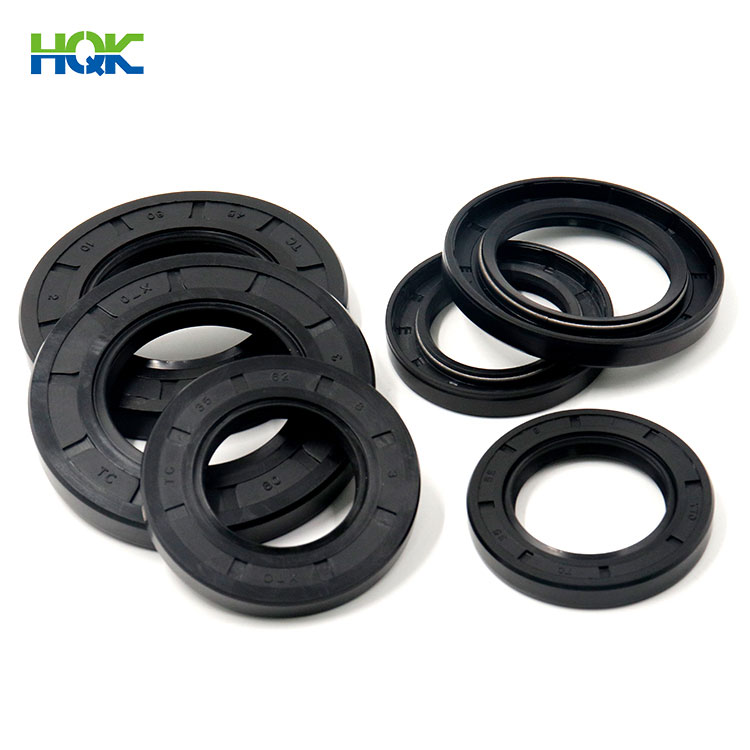
The size and geometry of the oil seal are guaranteed by the mold, and whether the structure of the mold is reasonable directly affects the appearance quality and performance of the oil seal. Structure design, several commonly used model structure types are introduced as follows.
Single mold oil seal mold:
The sealing lip of the oil seal product can be cut or directly molded, and the sealing benefits of the two are different. The cutting lip makes the lip sharp, which is conducive to sealing, and the size can be controlled, while the direct molding can avoid cutting, which is guaranteed by the mold, and the size is stable.
The single lip oil seal directly presses the mold, the middle mold and the lower mold are closed to form a mold cavity, the rubber material is filled in the mold cavity, the metal frame is sleeved in the upper mold, and then positioned by the cone surface between the upper and lower molds, under pressure When the mold is closed, the axial and radial positions of the skeleton are positioned by the upper mold.
Direct molding die with oil seal with auxiliary lip: the structure diagram of this die is basically the same at present, only one more die core is added to facilitate the processing of the cavity of the auxiliary lip [ ], and the processed lower die and the die core are connected by interference fit body.
Single-mould structure with no glue edge or thin glue edge: The characteristic of this mould structure is that the outer wall of the chamfer of the inner and outer mouths of the product is set with a surplus glue groove, so that the part where the product and the surplus glue groove are connected is narrow and thin. Mostly 02~03mm. Under the general pressure of the machine, the easy-to-tear glue edge must be broken at this part. The two excess glue grooves are to prevent the excess glue from accumulating on the matching glue edge when the excess glue is too thick to reach the tear edge. Effect.
Single mold oil seal mold:
The sealing lip of the oil seal product can be cut or directly molded, and the sealing benefits of the two are different. The cutting lip makes the lip sharp, which is conducive to sealing, and the size can be controlled, while the direct molding can avoid cutting, which is guaranteed by the mold, and the size is stable.
The single lip oil seal directly presses the mold, the middle mold and the lower mold are closed to form a mold cavity, the rubber material is filled in the mold cavity, the metal frame is sleeved in the upper mold, and then positioned by the cone surface between the upper and lower molds, under pressure When the mold is closed, the axial and radial positions of the skeleton are positioned by the upper mold.
Direct molding die with oil seal with auxiliary lip: the structure diagram of this die is basically the same at present, only one more die core is added to facilitate the processing of the cavity of the auxiliary lip [ ], and the processed lower die and the die core are connected by interference fit body.
Single-mould structure with no glue edge or thin glue edge: The characteristic of this mould structure is that the outer wall of the chamfer of the inner and outer mouths of the product is set with a surplus glue groove, so that the part where the product and the surplus glue groove are connected is narrow and thin. Mostly 02~03mm. Under the general pressure of the machine, the easy-to-tear glue edge must be broken at this part. The two excess glue grooves are to prevent the excess glue from accumulating on the matching glue edge when the excess glue is too thick to reach the tear edge. Effect.