Français

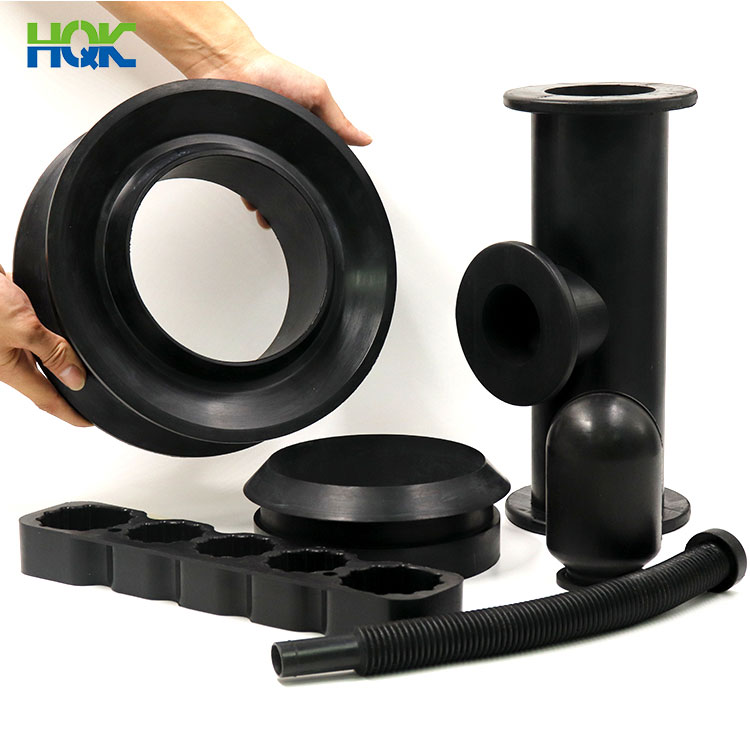
The cold resistance of rubber refers to the ability to maintain rubber elasticity and work normally at a specified low temperature. At low temperature, due to the rapid slowing down of the relaxation process of vulcanized rubber, the hardness, modulus and intramolecular friction increase, and the elasticity decreases significantly, resulting in a decrease in the working ability of rubber products, especially under dynamic conditions. When the temperature drops to the elastic limit At operating temperatures, the rubber hardens and shrinks, causing the seal to leak and fail. The cold resistance of vulcanizates mainly depends on two basic properties of polymers: glass transition and crystallization. Both cause the rubber to lose its elasticity at low temperatures.
The key to cold resistance is to choose raw rubber with good cold resistance, and the cold resistance of rubber mainly depends on the variety of rubber. For amorphous rubber, the glass transition temperature is lower and the cold resistance is better. For crystalline rubber, the cold resistance should consider the high and low crystallization of the glass transition temperature. Increasing the flexibility of the rubber molecular chain, reducing the intermolecular force and steric hindrance, and weakening the regularity of the macromolecular chain of rubber components and structural factors are all conducive to improving the cold resistance of rubber. Rubber combination is adjusted in rubber formulation design
Common methods of cold resistance, such as SBR combined with BR, NBR combined with NR, CO, ECO, can improve the cold resistance of rubber. The type of crosslinks affects the cold resistance of the rubber. When natural rubber uses the traditional vulcanization system, with the increase of the amount of sulfur until 30 parts, the shear modulus increases and the glass transition temperature also increases (can be raised to 20~30°C). By choosing an appropriate and effective vulcanization system, the glass transition temperature of rubber is 7°C lower than that of the traditional vulcanization system. Therefore, NR has the best cold resistance with SBR and DCP vulcanization. The cold resistance of thiuram vulcanization is reduced, and the cold resistance of vulcanization with sulfur/sulfenamide accelerators is the worst. The reason for the above difference is that when sulfur vulcanization is used, polysulfide bonds are generated, and intramolecular crosslinks are also generated, and a cyclization reaction occurs, thus reducing the mobility of the segment, increasing the elastic modulus, and vitrification. The temperature rises. When the amount of sulfur is reduced and the semi-effective or effective vulcanization system is used, the number of polysulfide bonds is reduced, and monosulfide bonds and disulfide bonds are mainly formed. When cured with peroxide and radiation, its cold resistance is better than that of effective curing system and traditional curing system, which is due to the larger coefficient of volume expansion of peroxide vulcanizates. The larger volume expansion coefficient can increase the free space of the chain segment activity, which is beneficial to the reduction of the glass transition temperature. In addition, when peroxide is vulcanized, strong and short C-C crosslinks are formed, while when sulfur is used for vulcanization, polysulfide bonds with less firmness and longer length are formed, so when deformation occurs, it is necessary to The overcome intermolecular force will be larger, and the weak bond will be distorted, which will increase the hysteresis loss and increase the creep rate. The viscous resistance part of the vulcanizate is larger than that of the peroxide vulcanizate. That is to say, in the rubber vulcanized with sulfur, the intermolecular force is much larger, which is the reason for the poor cold resistance of [vulcanized rubber. The effect of fillers on the cold resistance of rubber depends on the structure formed by the interaction between fillers and rubber. Increasing the content of rubber and reducing the amount of fillers, the addition of fillers will hinder the change of the segment configuration and increase the rigidity of the fillers. Therefore, the addition of fillers cannot be expected to improve the cold resistance of rubber. In addition, the reasonable selection of softening and plasticizing system is an effective measure to improve the cold resistance of rubber products. Adding plasticizers can reduce the glass transition temperature of rubber. For polar rubbers such as nitrile rubber and neoprene with poor cold resistance, the cold resistance is mainly improved by adding appropriate plasticizers. Because plasticizers can increase the flexibility of rubber molecules, reduce intermolecular forces, and make molecular segments easier to move, polar rubbers should use plasticizers with similar polarity and solubility parameters. The type and amount of softening plasticizer is critical to the cold resistance of rubber.
The key to cold resistance is to choose raw rubber with good cold resistance, and the cold resistance of rubber mainly depends on the variety of rubber. For amorphous rubber, the glass transition temperature is lower and the cold resistance is better. For crystalline rubber, the cold resistance should consider the high and low crystallization of the glass transition temperature. Increasing the flexibility of the rubber molecular chain, reducing the intermolecular force and steric hindrance, and weakening the regularity of the macromolecular chain of rubber components and structural factors are all conducive to improving the cold resistance of rubber. Rubber combination is adjusted in rubber formulation design
Common methods of cold resistance, such as SBR combined with BR, NBR combined with NR, CO, ECO, can improve the cold resistance of rubber. The type of crosslinks affects the cold resistance of the rubber. When natural rubber uses the traditional vulcanization system, with the increase of the amount of sulfur until 30 parts, the shear modulus increases and the glass transition temperature also increases (can be raised to 20~30°C). By choosing an appropriate and effective vulcanization system, the glass transition temperature of rubber is 7°C lower than that of the traditional vulcanization system. Therefore, NR has the best cold resistance with SBR and DCP vulcanization. The cold resistance of thiuram vulcanization is reduced, and the cold resistance of vulcanization with sulfur/sulfenamide accelerators is the worst. The reason for the above difference is that when sulfur vulcanization is used, polysulfide bonds are generated, and intramolecular crosslinks are also generated, and a cyclization reaction occurs, thus reducing the mobility of the segment, increasing the elastic modulus, and vitrification. The temperature rises. When the amount of sulfur is reduced and the semi-effective or effective vulcanization system is used, the number of polysulfide bonds is reduced, and monosulfide bonds and disulfide bonds are mainly formed. When cured with peroxide and radiation, its cold resistance is better than that of effective curing system and traditional curing system, which is due to the larger coefficient of volume expansion of peroxide vulcanizates. The larger volume expansion coefficient can increase the free space of the chain segment activity, which is beneficial to the reduction of the glass transition temperature. In addition, when peroxide is vulcanized, strong and short C-C crosslinks are formed, while when sulfur is used for vulcanization, polysulfide bonds with less firmness and longer length are formed, so when deformation occurs, it is necessary to The overcome intermolecular force will be larger, and the weak bond will be distorted, which will increase the hysteresis loss and increase the creep rate. The viscous resistance part of the vulcanizate is larger than that of the peroxide vulcanizate. That is to say, in the rubber vulcanized with sulfur, the intermolecular force is much larger, which is the reason for the poor cold resistance of [vulcanized rubber. The effect of fillers on the cold resistance of rubber depends on the structure formed by the interaction between fillers and rubber. Increasing the content of rubber and reducing the amount of fillers, the addition of fillers will hinder the change of the segment configuration and increase the rigidity of the fillers. Therefore, the addition of fillers cannot be expected to improve the cold resistance of rubber. In addition, the reasonable selection of softening and plasticizing system is an effective measure to improve the cold resistance of rubber products. Adding plasticizers can reduce the glass transition temperature of rubber. For polar rubbers such as nitrile rubber and neoprene with poor cold resistance, the cold resistance is mainly improved by adding appropriate plasticizers. Because plasticizers can increase the flexibility of rubber molecules, reduce intermolecular forces, and make molecular segments easier to move, polar rubbers should use plasticizers with similar polarity and solubility parameters. The type and amount of softening plasticizer is critical to the cold resistance of rubber.