Français

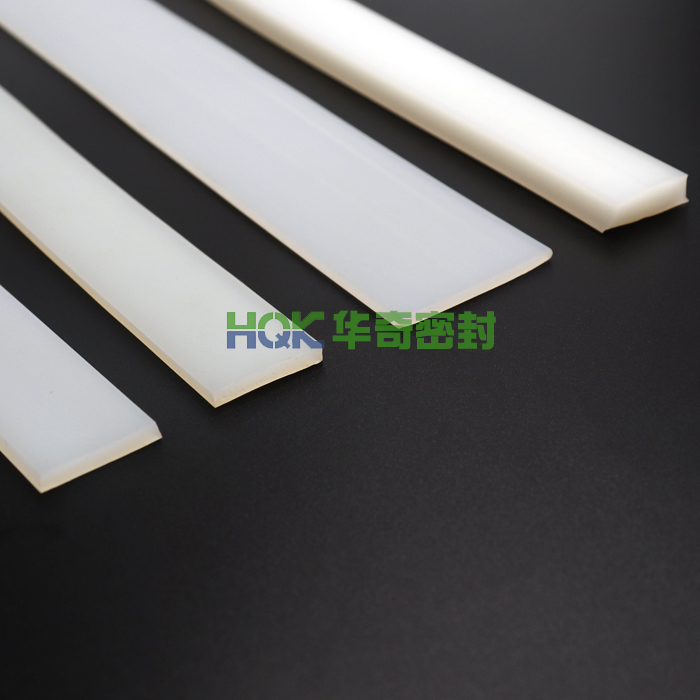
Extruded rubber strips merely acquire their shape; vulcanisation is essential to achieve their final physical properties.
Vulcanisation Method Selection:
Hot Air Vulcanisation Continuous Oven (HAV): Most commonly employed. Care must be taken to ensure uniform oven temperature, avoiding hot and cold spots that cause uneven vulcanisation.
Microwave Vulcanisation (UHF): An advanced process offering rapid vulcanisation speed. Simultaneous heating from the core to the surface ensures more uniform product quality. However, it requires significant capital investment in equipment and imposes specific formulation requirements on the rubber compound (which must be microwave-absorbent).
Salt Bath Vulcanisation (LCM): Now less frequently employed, primarily used for certain specialised rubbers.
Balancing Temperature, Speed and Time:
Vulcanisation is a function of temperature and time. Oven temperature and strip travel speed (i.e., vulcanisation time) must be precisely calculated and set based on product thickness and rubber compound vulcanometer data (T90 time).
The ‘Slow Vulcanisation, Fast Processing’ Principle: Provided scorch is avoided, appropriately raising temperatures and accelerating extrusion speeds can enhance production efficiency. Cooling:
Vulcanised silicone strips emerge at high temperatures and require thorough cooling (water-cooled or air-cooled) to stabilise and wind. Insufficient cooling leads to product deformation, sticking, and uneven shrinkage.
Vulcanisation Method Selection:
Hot Air Vulcanisation Continuous Oven (HAV): Most commonly employed. Care must be taken to ensure uniform oven temperature, avoiding hot and cold spots that cause uneven vulcanisation.
Microwave Vulcanisation (UHF): An advanced process offering rapid vulcanisation speed. Simultaneous heating from the core to the surface ensures more uniform product quality. However, it requires significant capital investment in equipment and imposes specific formulation requirements on the rubber compound (which must be microwave-absorbent).
Salt Bath Vulcanisation (LCM): Now less frequently employed, primarily used for certain specialised rubbers.
Balancing Temperature, Speed and Time:
Vulcanisation is a function of temperature and time. Oven temperature and strip travel speed (i.e., vulcanisation time) must be precisely calculated and set based on product thickness and rubber compound vulcanometer data (T90 time).
The ‘Slow Vulcanisation, Fast Processing’ Principle: Provided scorch is avoided, appropriately raising temperatures and accelerating extrusion speeds can enhance production efficiency. Cooling:
Vulcanised silicone strips emerge at high temperatures and require thorough cooling (water-cooled or air-cooled) to stabilise and wind. Insufficient cooling leads to product deformation, sticking, and uneven shrinkage.