Français

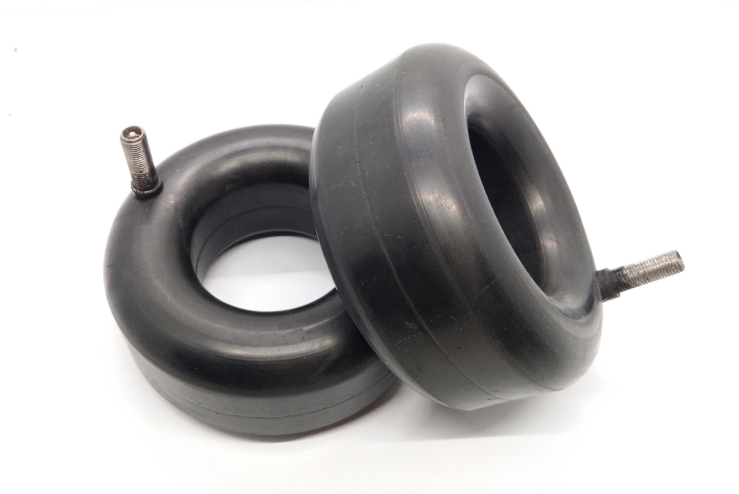
The amount of sulfur. The larger the amount, the faster the vulcanization speed and the higher the degree of vulcanization that can be achieved. The solubility of sulfur in rubber is limited and excess sulfur will precipitate from the surface of the rubber, commonly known as "sulfur spraying". In order to reduce sulfur spraying, it is necessary to add sulfur at the lowest possible temperature, or at least below the melting point of sulfur. According to the requirements of rubber products, the amount of sulfur in soft rubber is generally no more than 3%, in semi-hard rubber the amount is generally about 20%, and in hard rubber the amount can be as high as 40% or more.
1、Vulcanization temperature: If the temperature is 10°C higher, the vulcanization time is shortened by about half. As the rubber is a bad thermal conductor, the vulcanization process of the product due to the difference in temperature of its parts and different
The same. In order to ensure a more uniform degree of vulcanization, thick rubber products - the general use of gradual heating, low temperature vulcanization for a long time.
2, vulcanization time: this is an important part of the vulcanization process, the time is too short, the degree of vulcanization is not enough (also known as less sulfur). Time is too long, the degree of vulcanization is too high (commonly known as over sulfur). Only the appropriate degree of vulcanization (commonly known as positive vulcanization), in order to ensure the best overall performance
1、Vulcanization temperature: If the temperature is 10°C higher, the vulcanization time is shortened by about half. As the rubber is a bad thermal conductor, the vulcanization process of the product due to the difference in temperature of its parts and different
The same. In order to ensure a more uniform degree of vulcanization, thick rubber products - the general use of gradual heating, low temperature vulcanization for a long time.
2, vulcanization time: this is an important part of the vulcanization process, the time is too short, the degree of vulcanization is not enough (also known as less sulfur). Time is too long, the degree of vulcanization is too high (commonly known as over sulfur). Only the appropriate degree of vulcanization (commonly known as positive vulcanization), in order to ensure the best overall performance