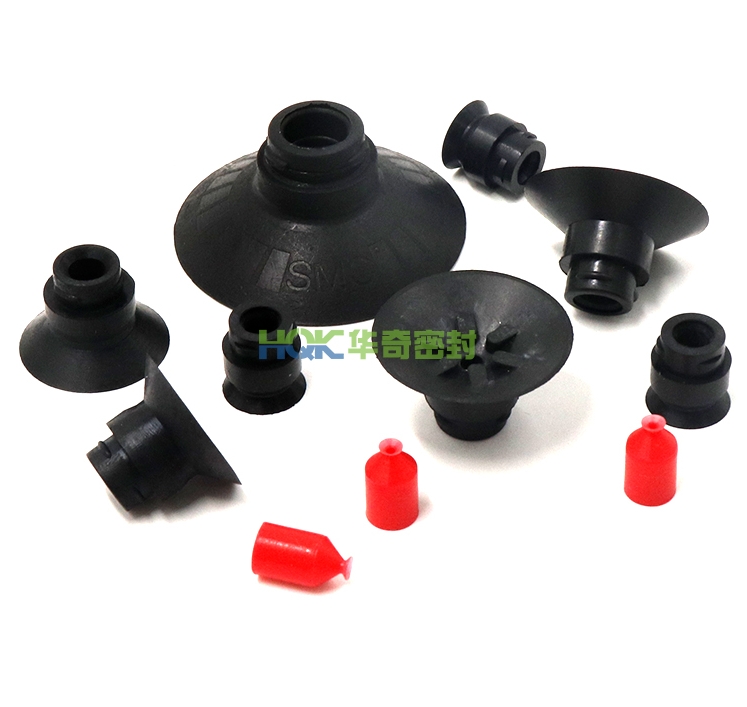
There are two main types of rubber used in vacuum systems: vulcanized rubber and synthetic rubber (including butyl, chlorine-based, butyl rubber), in addition to silicone rubber and fluorine rubber. In addition to the correct design of the sealing structure, the rational selection of sealing materials is also the key to realize the vacuum rubber sealing. Several major factors affect vacuum sealing, including the rubber's heat resistance, compression set resistance, air leakage rate, air permeability, outgassing rate, and sublimation (weight loss).
Heat resistance: In vacuum systems, rubber seals must be heat resistant to ensure smooth baking and degassing. Baking temperature below 120 ° C and 10 ^-5Pa vacuum, can be used butyl or clear rubber; if the baking temperature is higher and in the ultra-high vacuum environment, the need to use fluorine rubber. Resistance to compression deformation: In vacuum systems, most vacuum seals work under compression. In order to ensure the reliability and life of the seals, the rubber seals should have a small compression deformation value (preferably less than 35%) and a slow compression stress relaxation (i.e., a large compression stress relaxation factor).
We use cookies on our website to see how you interact with it. By accepting, you agree to our use of such cookies. privacy policy
Advanced Cookie Settings
Essential Cookies
These cookies enable core functionality such as security, verification of identity and network management. These cookies can’t be disabled.
Enable Marketing Cookies
These cookies are used to track advertising performance, consent to the sending of advertising-related user data to Google, and consent for the website to serve personalized advertising to provide more relevant services.
Enable Functional Cookies
These cookies collect data to remember choices users make to improve and give a more personalised experience.
Enable Analytics Cookies
These cookies help us to understand how visitors interact with our website, discover errors and provide a better overall analytics.

 Français