Français

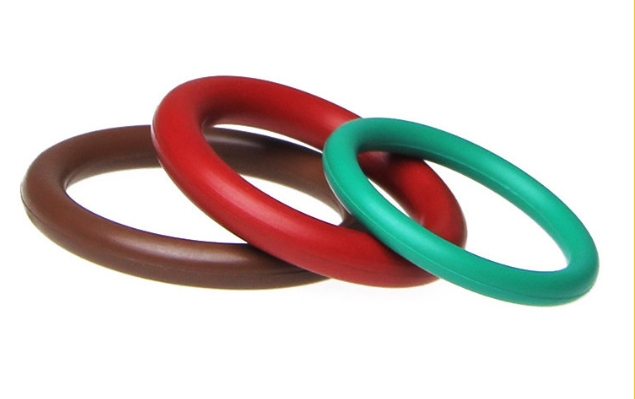
There are indeed many rubber raw materials for oil seals, such as nitrile rubber, fluoroelastomer, hydrogenated nitrile rubber, silicone rubber, AEM and so on. But the choice of which raw material to do oil seals is based on the requirements of the use of oil seals indicators to choose. The use environment of oil seal is hot oil state, need to resist temperature and oil.
1、Silicone rubber is not oil-resistant, does not meet the requirements, eliminated;.
2, if the working part of the temperature is low, generally within 120 degrees, then optional NBR, the relative price is also appropriate.
3, if the temperature exceeds 120 degrees, you need to choose ACM, but its gasoline resistance is not good, more processing problems, compression time will be deformed. The oil seal made of common ACM material is easy to produce oil leakage under high speed operation. AEM can be considered.
4、If the requirement is higher and the cost is more relaxed, fluoroelastomer is the best choice. Now tens of dollars on the fluorine rubber rubber, such as cost restrictions on the basic solution to the problem, the fluorine rubber is very cost-effective.
5, if the requirements are higher, such as oil wells inside the seal, you can only use hydrogenated nitrile butadiene rubber.NBR and FKM rubber materials to do the most common oil seals, occupying the high and low-grade areas; ACM and AEM to do the oil seals in the market area is getting bigger and bigger; HNBR is to do the ultra-high-level oil seals of the professional rubber materials; silicone rubber heat-resistant although powerful, but is not suitable for doing the oil seals!
1、Silicone rubber is not oil-resistant, does not meet the requirements, eliminated;.
2, if the working part of the temperature is low, generally within 120 degrees, then optional NBR, the relative price is also appropriate.
3, if the temperature exceeds 120 degrees, you need to choose ACM, but its gasoline resistance is not good, more processing problems, compression time will be deformed. The oil seal made of common ACM material is easy to produce oil leakage under high speed operation. AEM can be considered.
4、If the requirement is higher and the cost is more relaxed, fluoroelastomer is the best choice. Now tens of dollars on the fluorine rubber rubber, such as cost restrictions on the basic solution to the problem, the fluorine rubber is very cost-effective.
5, if the requirements are higher, such as oil wells inside the seal, you can only use hydrogenated nitrile butadiene rubber.NBR and FKM rubber materials to do the most common oil seals, occupying the high and low-grade areas; ACM and AEM to do the oil seals in the market area is getting bigger and bigger; HNBR is to do the ultra-high-level oil seals of the professional rubber materials; silicone rubber heat-resistant although powerful, but is not suitable for doing the oil seals!