Français

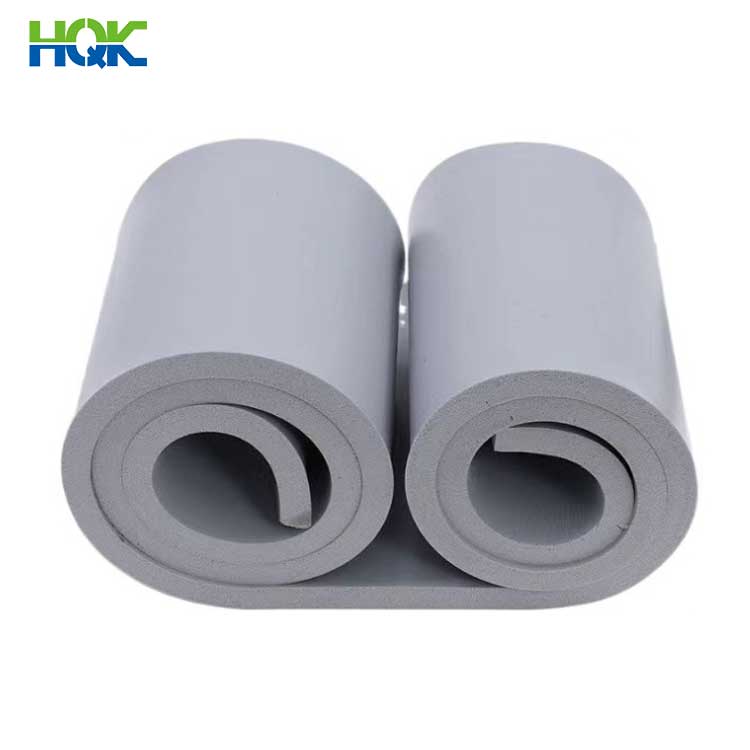
The post-processing technology referred to here is the application of certain physical and chemical methods, so that the use of products to further improve the performance and service life is further extended.
1.Surface chemical treatment
For some products, especially sealing products sometimes with surface halogenation treatment, can improve the surface hardness of rubber, but does not affect the elasticity and strength of the body material, mainly to reduce the friction coefficient of dynamic seals, such as oil seals, can be reduced to the original 1/5 ~ 1/3, to improve service life. The surface halogenation treatment of nitrile rubber samples, through infrared spectroscopy and scanning electron microscopy observation, found that the rubber surface polymer chain cyclisation and the generation of polar groups, so that the surface of the rubber appeared in the micro-uniform unevenness, which reduces the coefficient of friction, but also reduces the contact area of the operating temperature. Domestic mostly use chlorinated liquid for halogenation treatment, with 24% chlorine water plus hydrochloric acid formulated into an aqueous solution, the products are cleaned, put into the chlorinated liquid chlorinated for a certain period of time, neutralised with sodium hypochlorite, then washed with water, and then put into the oven for drying can be.
2.Surface coating
The surface coating of the products is to improve certain properties of the surface. Such as polyisobutylene coating can improve the unsaturated rubber ozone and weather aging resistance; polyurethane coating can improve isoprene rubber, styrene-butadiene rubber, butadiene rubber, the weather resistance, oil resistance; PTFE - polyimide coating can make the static and dynamic coefficient of friction of the rubber products is greatly reduced. Can be coated by electrostatic spraying, immersion film, penetration film and other methods.
1.Surface chemical treatment
For some products, especially sealing products sometimes with surface halogenation treatment, can improve the surface hardness of rubber, but does not affect the elasticity and strength of the body material, mainly to reduce the friction coefficient of dynamic seals, such as oil seals, can be reduced to the original 1/5 ~ 1/3, to improve service life. The surface halogenation treatment of nitrile rubber samples, through infrared spectroscopy and scanning electron microscopy observation, found that the rubber surface polymer chain cyclisation and the generation of polar groups, so that the surface of the rubber appeared in the micro-uniform unevenness, which reduces the coefficient of friction, but also reduces the contact area of the operating temperature. Domestic mostly use chlorinated liquid for halogenation treatment, with 24% chlorine water plus hydrochloric acid formulated into an aqueous solution, the products are cleaned, put into the chlorinated liquid chlorinated for a certain period of time, neutralised with sodium hypochlorite, then washed with water, and then put into the oven for drying can be.
2.Surface coating
The surface coating of the products is to improve certain properties of the surface. Such as polyisobutylene coating can improve the unsaturated rubber ozone and weather aging resistance; polyurethane coating can improve isoprene rubber, styrene-butadiene rubber, butadiene rubber, the weather resistance, oil resistance; PTFE - polyimide coating can make the static and dynamic coefficient of friction of the rubber products is greatly reduced. Can be coated by electrostatic spraying, immersion film, penetration film and other methods.