Français

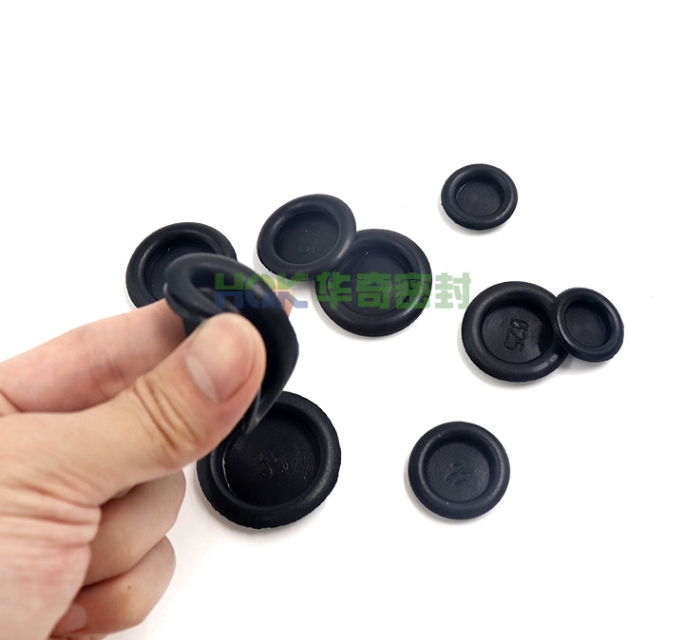
Rubber by plasticising to increase its plasticity, the essence is to make the rubber molecular chain fracture, reduce the length of the macromolecule. Breakage can occur both in the main chain of the macromolecule and in the side chain. As the rubber in the plastic, suffered to oxygen, electricity, heat, mechanical force and plasticiser and other factors, so the plastic mechanism and these factors are closely related, which plays an important role is the oxygen and mechanical force, and the two complement each other. Usually the plasticising can be distinguished as low-temperature plasticising and high-temperature plasticising, the former to mechanical degradation is the main role, oxygen plays a role in stabilising the free radical; the latter to automatic oxidative degradation is the main role, the mechanical effect can strengthen the rubber and oxygen contact.
Plasticising, roller on the mechanical force of the raw rubber is very large, and forced the rubber molecular chain breakage, this breakage occurs mostly in the middle part of the macromolecule. The longer the molecular chain, the easier it is to cut off during moulding. The reason why it is difficult to break the chain mechanically, one of the important reasons is because of the lack of high molecular weight class in the raw rubber. When adding high molecular weight grades, low-temperature plasticising can obtain significant results. Oxygen is an indispensable factor in plasticising, and the desired effect cannot be obtained when there is a lack of oxygen. The friction between the equipment and the rubber obviously raises the temperature of the rubber when the raw rubber is plastified. Heat is extremely important for the plasticising effect and has different effects in different temperature ranges. Because of the low-temperature plasticising, mainly relying on mechanical force to make the molecular chain fracture, so in the region like chapter (natural rubber below 110 ℃) with the temperature rise, the viscosity of raw rubber decreases, plasticising by the force is smaller, so that the plasticising effect is reduced. On the contrary, high-temperature plasticising, mainly oxidative cracking reaction plays a dominant role, and thus the plasticising effect in the high-temperature zone (natural rubber higher than 110 ℃) will increase with the increase in temperature, so the temperature plays a role in promoting plasticising. Various rubber due to different characteristics, corresponding to the lowest plasticising effect of the temperature range is not the same, but the shape of the curve of the effect of temperature on plasticising is similar. It is known that the use of chemical plasticisers improves the plasticising effect in both low-temperature and high-temperature plasticising. Acceptor-type plasticisers, such as benzoquinone and azobenzene, etc., they play the role of free radical acceptor in low-temperature refining, which can make the chain of rubber molecules stabilised by free radicals, and then generate a shorter molecule; initiator-type plasticisers, such as benzoyl peroxide and azobisisobutyronitrile, etc., which decompose at high temperatures into a very unstable free radicals, and then initiate the generation of large molecules of rubber molecules free radicals, and then oxidised and fractured. In addition, such as thiols and two o-o-benzamide phenyl disulfide substances, they can make the rubber molecule free base stability, but also at high temperatures to trigger the formation of rubber free base to accelerate the automatic oxidation rupture, so this kind of chemical plasticisers known as mixed plasticisers or chain transfer plasticisers.
Plasticising, roller on the mechanical force of the raw rubber is very large, and forced the rubber molecular chain breakage, this breakage occurs mostly in the middle part of the macromolecule. The longer the molecular chain, the easier it is to cut off during moulding. The reason why it is difficult to break the chain mechanically, one of the important reasons is because of the lack of high molecular weight class in the raw rubber. When adding high molecular weight grades, low-temperature plasticising can obtain significant results. Oxygen is an indispensable factor in plasticising, and the desired effect cannot be obtained when there is a lack of oxygen. The friction between the equipment and the rubber obviously raises the temperature of the rubber when the raw rubber is plastified. Heat is extremely important for the plasticising effect and has different effects in different temperature ranges. Because of the low-temperature plasticising, mainly relying on mechanical force to make the molecular chain fracture, so in the region like chapter (natural rubber below 110 ℃) with the temperature rise, the viscosity of raw rubber decreases, plasticising by the force is smaller, so that the plasticising effect is reduced. On the contrary, high-temperature plasticising, mainly oxidative cracking reaction plays a dominant role, and thus the plasticising effect in the high-temperature zone (natural rubber higher than 110 ℃) will increase with the increase in temperature, so the temperature plays a role in promoting plasticising. Various rubber due to different characteristics, corresponding to the lowest plasticising effect of the temperature range is not the same, but the shape of the curve of the effect of temperature on plasticising is similar. It is known that the use of chemical plasticisers improves the plasticising effect in both low-temperature and high-temperature plasticising. Acceptor-type plasticisers, such as benzoquinone and azobenzene, etc., they play the role of free radical acceptor in low-temperature refining, which can make the chain of rubber molecules stabilised by free radicals, and then generate a shorter molecule; initiator-type plasticisers, such as benzoyl peroxide and azobisisobutyronitrile, etc., which decompose at high temperatures into a very unstable free radicals, and then initiate the generation of large molecules of rubber molecules free radicals, and then oxidised and fractured. In addition, such as thiols and two o-o-benzamide phenyl disulfide substances, they can make the rubber molecule free base stability, but also at high temperatures to trigger the formation of rubber free base to accelerate the automatic oxidation rupture, so this kind of chemical plasticisers known as mixed plasticisers or chain transfer plasticisers.