Français

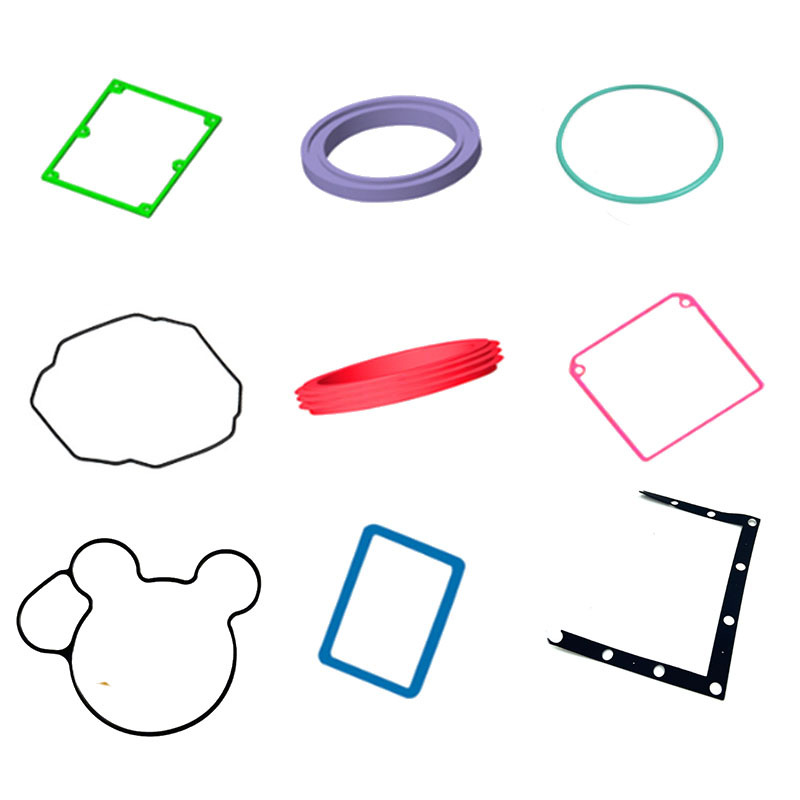
1. Prevent leakage
Fluid sealing: Prevent gases or liquids (such as oil, water, or chemical media) from leaking from the interior of the system to the exterior (static or dynamic sealing). Pressure maintenance: Maintain pressure within a sealed system (e.g., hydraulic systems, pneumatic equipment).
2. Prevent contamination
Dust and contamination prevention: Prevent external dust, particles, moisture, and other contaminants from entering the equipment interior (e.g., bearing seals). Cross-contamination isolation: Prevent mixing of different media in the food and pharmaceutical industries.
3. Reduce friction and wear
Lubrication assistance: Form a lubricating film between moving parts (e.g., pistons, shafts) to reduce friction loss. Component protection: Prevent direct contact between metal components to extend equipment lifespan.
4. Cushioning and vibration damping
Vibration absorption: Mitigate mechanical vibrations and impacts in dynamic applications (e.g., automotive suspension systems).
5. Adapting to different operating conditions
Temperature/chemical resistance: Adapt to high-temperature, low-temperature, or corrosive environments based on material properties (e.g., silicone, fluorocarbon rubber, PTFE). Elastic deformation: Fill gaps through deformation to accommodate component tolerances or minor displacements.
Fluid sealing: Prevent gases or liquids (such as oil, water, or chemical media) from leaking from the interior of the system to the exterior (static or dynamic sealing). Pressure maintenance: Maintain pressure within a sealed system (e.g., hydraulic systems, pneumatic equipment).
2. Prevent contamination
Dust and contamination prevention: Prevent external dust, particles, moisture, and other contaminants from entering the equipment interior (e.g., bearing seals). Cross-contamination isolation: Prevent mixing of different media in the food and pharmaceutical industries.
3. Reduce friction and wear
Lubrication assistance: Form a lubricating film between moving parts (e.g., pistons, shafts) to reduce friction loss. Component protection: Prevent direct contact between metal components to extend equipment lifespan.
4. Cushioning and vibration damping
Vibration absorption: Mitigate mechanical vibrations and impacts in dynamic applications (e.g., automotive suspension systems).
5. Adapting to different operating conditions
Temperature/chemical resistance: Adapt to high-temperature, low-temperature, or corrosive environments based on material properties (e.g., silicone, fluorocarbon rubber, PTFE). Elastic deformation: Fill gaps through deformation to accommodate component tolerances or minor displacements.