Français

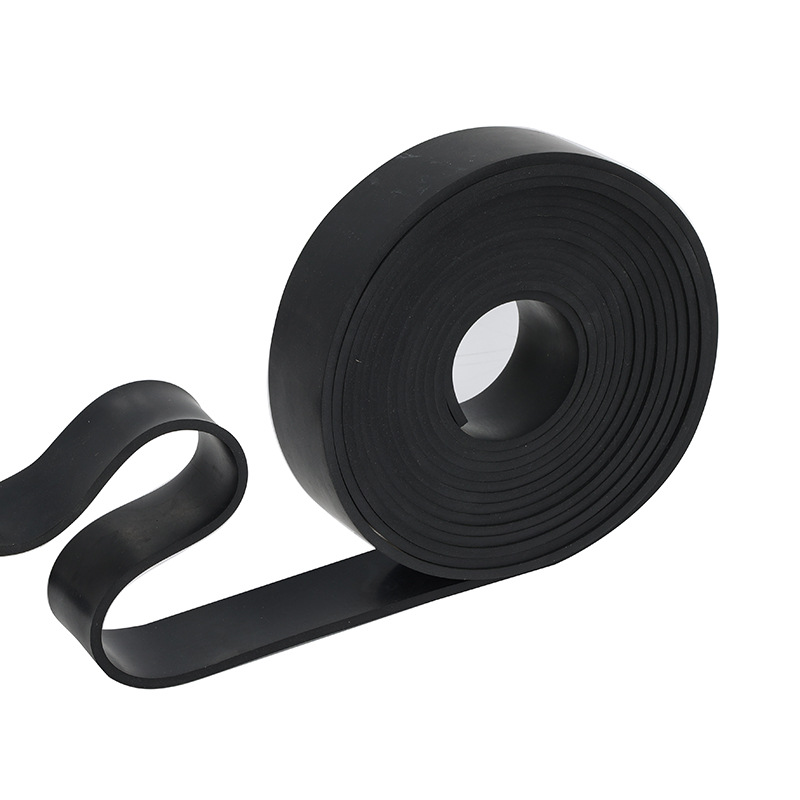
1. Excellent Oil Resistance
Core Advantage: The polar cyano groups (–CN) in the NBR molecular chain provide exceptional resistance to non-polar oils such as mineral oil, fuel oil, and hydraulic oil.
Typical Data: In ASTM D471 standard testing, after being immersed in IRM 903 oil (100°C for 70 hours), the volume expansion rate of NBR was only 5%–15%, significantly lower than that of natural rubber. Application Scenarios: Fuel line seals, engine oil pan gaskets, hydraulic equipment seals, etc.
2. Chemical Resistance
Solvent resistance: It has some resistance to alcohols, weak acids, alkalis, esters, etc. (but not as good as fluorocarbon rubber). Limitations: It is not resistant to ketones, chlorinated hydrocarbons, or strong oxidizing acids (such as concentrated nitric acid).
3. Balanced mechanical properties
Tensile strength: 15–30 MPa (better than ordinary silicone rubber but lower than polyurethane).
Abrasion resistance: Abrasion volume (DIN 53516) approximately 40–80 mm³, suitable for dynamic seals (e.g., rotating shaft lip seals). Elasticity and compression set: Compression set rate (70°C × 24h) approximately 20–40%, which can be reduced through formulation optimization.
4. Temperature Adaptability Range
Standard grades: -30°C to +100°C (short-term up to 120°C). Special modifications:
Hydrogenated nitrile rubber (HNBR): Temperature resistance improved to 150°C, with significantly enhanced ozone resistance. Carboxylated nitrile rubber (XNBR): Abrasion resistance increased by 30–50%.
5. Outstanding cost-effectiveness
Price comparison: NBR raw material costs approximately 20–40 RMB/kg, which is one-tenth the cost of fluorocarbon rubber (200–400 RMB/kg) and half the cost of silicone rubber (50–100 RMB/kg). Processing convenience: Rapid vulcanization and excellent adhesion to metal frameworks (requires specialized adhesive).
Core Advantage: The polar cyano groups (–CN) in the NBR molecular chain provide exceptional resistance to non-polar oils such as mineral oil, fuel oil, and hydraulic oil.
Typical Data: In ASTM D471 standard testing, after being immersed in IRM 903 oil (100°C for 70 hours), the volume expansion rate of NBR was only 5%–15%, significantly lower than that of natural rubber. Application Scenarios: Fuel line seals, engine oil pan gaskets, hydraulic equipment seals, etc.
2. Chemical Resistance
Solvent resistance: It has some resistance to alcohols, weak acids, alkalis, esters, etc. (but not as good as fluorocarbon rubber). Limitations: It is not resistant to ketones, chlorinated hydrocarbons, or strong oxidizing acids (such as concentrated nitric acid).
3. Balanced mechanical properties
Tensile strength: 15–30 MPa (better than ordinary silicone rubber but lower than polyurethane).
Abrasion resistance: Abrasion volume (DIN 53516) approximately 40–80 mm³, suitable for dynamic seals (e.g., rotating shaft lip seals). Elasticity and compression set: Compression set rate (70°C × 24h) approximately 20–40%, which can be reduced through formulation optimization.
4. Temperature Adaptability Range
Standard grades: -30°C to +100°C (short-term up to 120°C). Special modifications:
Hydrogenated nitrile rubber (HNBR): Temperature resistance improved to 150°C, with significantly enhanced ozone resistance. Carboxylated nitrile rubber (XNBR): Abrasion resistance increased by 30–50%.
5. Outstanding cost-effectiveness
Price comparison: NBR raw material costs approximately 20–40 RMB/kg, which is one-tenth the cost of fluorocarbon rubber (200–400 RMB/kg) and half the cost of silicone rubber (50–100 RMB/kg). Processing convenience: Rapid vulcanization and excellent adhesion to metal frameworks (requires specialized adhesive).