Français

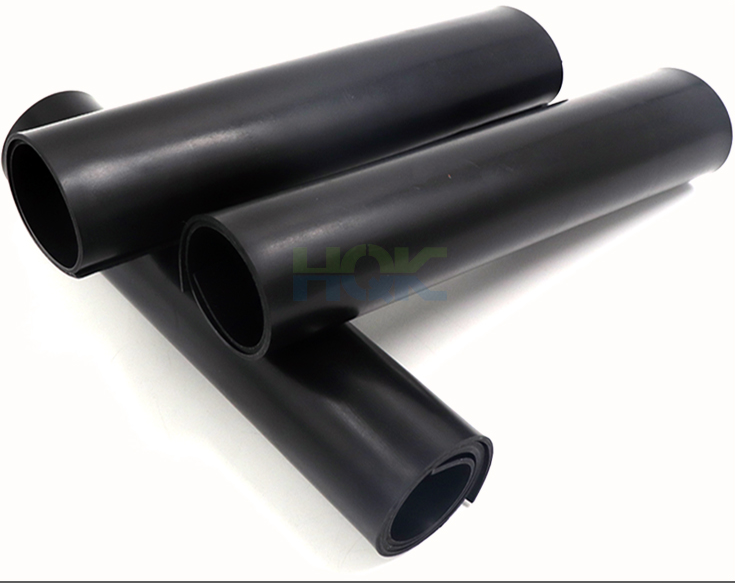
1, mixed fluorine rubber dead material, the reason for the ingredient rubber contact with sulfur yellow or sulfur yellow products, many enterprises do not have a special refining fluorine rubber machine, often refining other sulfur yellow rubber material, cleaning is not in place, or ingredients accidentally tainted with sulfur yellow or water, so that can be combined with the fluorine rubber promoter caused by scorching, or the role of water to make the fluorine rubber surface activation decomposition. Solution, the best special machine, if not, should also be in the conversion of fluorine rubber before the refining, must be completely clean the baffle plate and the material plate, absolutely avoid contact with water and sulfur yellow, ingredients application special tools, a material a spoon, to prevent cross-contamination. Keep calcium hydroxide and magnesium oxide sealed and ready to use.
2, the sticky roller phenomenon, mainly in the mixing process on the opening machine, the rubber material tightly wrapped in the back of the roller, or at the same time wrapped before and after the two rollers, resulting in the former rubber material can not turn refining, and the latter with the added agent easily pressed into flakes and fall off, resulting in uneven dispersion. The main reason for the fluorine rubber material sticking to the rollers is the low Menny or low molecular content of fluorine rubber. The solution to this problem is to use raw rubber with a viscosity of 70 left in the selection of rubber, while using raw rubber with a narrow molecular weight distribution, and then adding a small amount of Brazilian wax or fluorine wax, or low molecular weight polyethylene in the formula, which can also solve the sticky roller phenomenon.
2, the sticky roller phenomenon, mainly in the mixing process on the opening machine, the rubber material tightly wrapped in the back of the roller, or at the same time wrapped before and after the two rollers, resulting in the former rubber material can not turn refining, and the latter with the added agent easily pressed into flakes and fall off, resulting in uneven dispersion. The main reason for the fluorine rubber material sticking to the rollers is the low Menny or low molecular content of fluorine rubber. The solution to this problem is to use raw rubber with a viscosity of 70 left in the selection of rubber, while using raw rubber with a narrow molecular weight distribution, and then adding a small amount of Brazilian wax or fluorine wax, or low molecular weight polyethylene in the formula, which can also solve the sticky roller phenomenon.
3, on the blending rubber in the appearance of small white spots, which is due to fluorine rubber with some powder dispersion is not uniform, or due to the powder moisture crystallization, such as acid absorbers calcium hydroxide, magnesium oxide and diatomaceous earth, barium sulfate, etc., the solution, to prevent the matching agent moisture and strengthen the thin pass process.
4, the product is easy to tear. Causes, may be too thick burr, trimming tear, or mold with too tight, out of the mold burr parts are stuck in the mold, easy to tear from the product and burr before, uneven force when starting the mold, easy to tear the product. Sometimes the mold cavity processing rough, or rubber sticky mold, vulcanization finished out of the mold, resulting in difficulties to take off the mold, easy to tear the product. In addition, the vulcanization temperature is too high, which will also make the products become brittle and easy to tear. For the above abnormalities, can be solved from the following aspects: mold processing accuracy to master the cavity roughness Ra less than 0.8, with the gap is not too large, vulcanization temperature control left 170 degrees between the good, while the rubber weighing to be accurate.
5, shrinkage and cracking problem, is due to the pressure is removed when opening the mold, fluorine rubber shrinkage, and the burr part is stuck in the mold with the surface between, so in the product part and the burr between a tensile force, so that the product and the burr crack, when the crack enclosure expanded to the product part, it causes shrinkage and cracking phenomenon. The solution is to reduce the vulcanization temperature appropriately, choose the viscosity of Menny in about 70 [ML1+4] 121 degrees, and at the same time, the mold fit degree should be suitable, not too loose too tight.
6, burning edge, is the vulcanization temperature is too high, especially thick products, appropriate to reduce the vulcanization temperature can be overcome.
7, there are traces at the joint. Is due to the lap part of the rubber is not fully integrated together, or due to the rubber strip has impurities or oil fouling, the solution is to keep the preformed rubber strip in storage, transportation, loading glue clean, to prevent pollution.
8, lack of glue. This is related to the structure of the mold and the liquidity of the glue. The closed mold is more likely to produce lack of glue than the open mold. The solution is to adjust the liquidity of the adhesive material and open the air venting hole in the mold cavity.
9, product deformation. This is due to the large shrinkage of fluorine rubber, after molding the product shrinkage anisotropy, the coefficient of thermal expansion of the rubber in different directions is different, the two vulcanization process will form additional cross-linking, especially a vulcanization of under-sulfur, two vulcanization of the product, more obvious deformation, so to give full cross-linking in a period of vulcanization time, to avoid the two vulcanization of the product deformation.
10, mold stain serious phenomenon. We generally use 26 type fluorine rubber, using phenol vulcanization system, there will be HF generated during the vulcanization process, it is a very strong acid, has a great corrosive effect on the mold, the formula to add acid absorbent is to absorb the HF generated to prevent pollution of the mold. The solution is to use sufficient calcium hydroxide and magnesium oxide in accordance with the formula, the dosage is generally 6 parts and 3 parts, and Brazilian wax can be added to the formula, which can migrate to the rubber surface during the vulcanization to form a film to prevent the mold from being contaminated.