Français

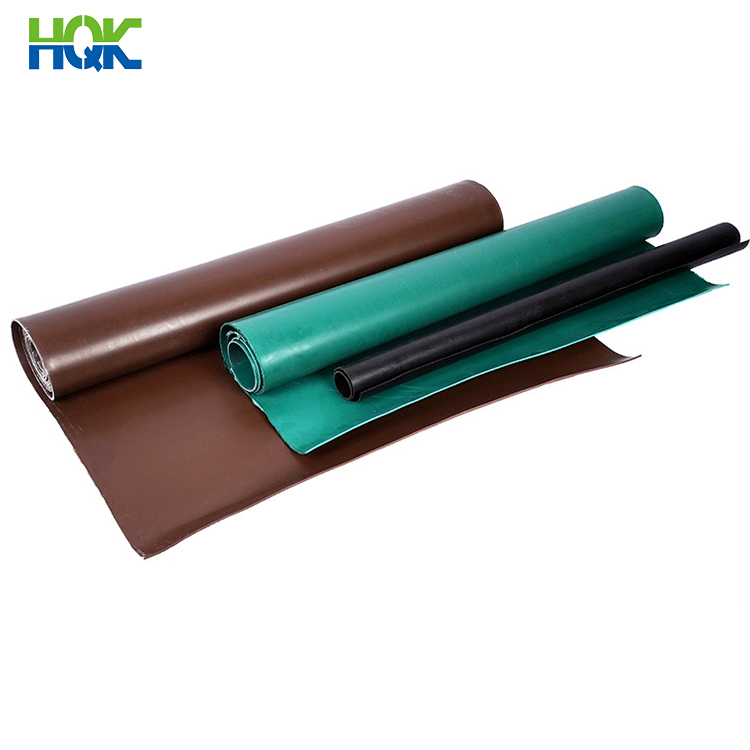
(1) the choice of rubber varieties of oil resistance generally refers to the resistance of non-polar oils, so the choice of varieties should be with the oil solubility parameter difference is appropriate. General selection of rubber with polar groups, such as fluorine rubber, fluorosilicone rubber, nitrile rubber, neoprene rubber, acrylate rubber, chloroether rubber, polysulfide rubber and polyurethane rubber. Among them, fluoroelastomer and fluorosilicone rubber are not only oil resistant but also high temperature resistant, but expensive. Acrylate rubber has better oil and heat resistance, but poorer water and water vapour resistance, and polysulfide rubber has poorer physical and mechanical properties. The most commonly used oil-resistant rubbers are nitrile rubber and neoprene rubber. According to the oil resistance characteristics of various rubbers are different. It should be noted that, even if the same rubber, grade and quality are different, the difference in its oil resistance is also very large, generally poor processing properties of high Mooney rubber oil resistance is excellent.
(2) In principle, the matching system should be selected to match the agent that is not easy to be extracted by the oil. Vulcanisation system should try to improve the crosslinking density of the rubber, sulfur dosage can be appropriately increased, and phenolic resins and can improve the oil resistance of vulcanised rubber. Increase the amount of filler can help to improve the oil resistance. Filler with carbon black is the most appropriate, light-coloured products can use clay, barium sulfate, calcium silicate and activated calcium carbonate.
Plasticisers with high polarity and molecular weight that are not easily extracted by oil should be used, and it is better to use low molecular polymers such as low molecular polyethylene, polyester plasticisers and liquid rubber. Softeners with high polarity and high molecular weight have a better effect on oil resistance. Softeners can be used aromatic oils and esters, the amount should not be too much should be selected is not easy to be extracted by the oil antioxidant. Gelatin and casein and other substances to improve the oil resistance of natural rubber has a certain effect, can be used as additives.
(2) In principle, the matching system should be selected to match the agent that is not easy to be extracted by the oil. Vulcanisation system should try to improve the crosslinking density of the rubber, sulfur dosage can be appropriately increased, and phenolic resins and can improve the oil resistance of vulcanised rubber. Increase the amount of filler can help to improve the oil resistance. Filler with carbon black is the most appropriate, light-coloured products can use clay, barium sulfate, calcium silicate and activated calcium carbonate.
Plasticisers with high polarity and molecular weight that are not easily extracted by oil should be used, and it is better to use low molecular polymers such as low molecular polyethylene, polyester plasticisers and liquid rubber. Softeners with high polarity and high molecular weight have a better effect on oil resistance. Softeners can be used aromatic oils and esters, the amount should not be too much should be selected is not easy to be extracted by the oil antioxidant. Gelatin and casein and other substances to improve the oil resistance of natural rubber has a certain effect, can be used as additives.