Français

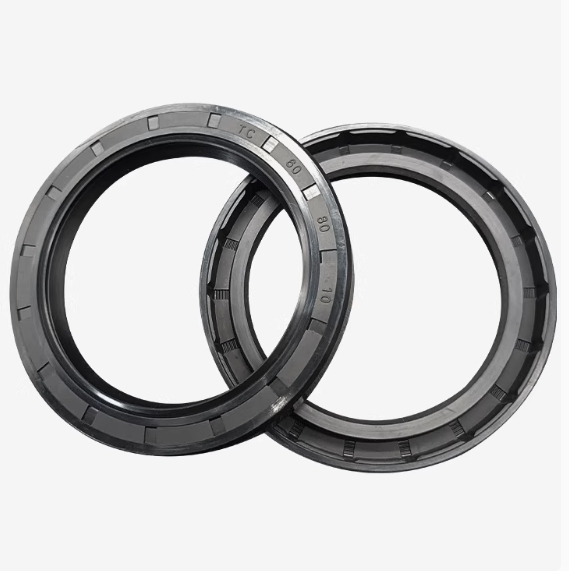
(1) Contact pressure between lip and shaft
Spring pressurisation: The spring force makes the rubber sealing lip close to the surface of the rotating shaft, forming the initial contact pressure.
Fluid pressure assisted: when the internal lubricant pressure rises, the oil pressure will further push the sealing lip tightly against the shaft surface (similar to the ‘self-tightening’ seal).
(2) Critical control of the oil film
micron oil film: sealing lip and shaft between the formation of a layer of very thin lubricant film (about 1 ~ 3μm), play a lubricating effect, reduce friction heat.
Pumping effect: the bevelled design of the sealing lip (e.g. ‘front lip’ and ‘back lip’) produces a spiral pumping effect when the shaft rotates, which ‘pumps’ the leaked oil back to the inside of the sealing cavity.
(3) Anti-pollutant intrusion
Main lip (sealing side): to prevent the internal oil leakage.
The secondary lip (dustproof side): prevents external dust and water vapour from entering (double lip type oil seal).
Spring pressurisation: The spring force makes the rubber sealing lip close to the surface of the rotating shaft, forming the initial contact pressure.
Fluid pressure assisted: when the internal lubricant pressure rises, the oil pressure will further push the sealing lip tightly against the shaft surface (similar to the ‘self-tightening’ seal).
(2) Critical control of the oil film
micron oil film: sealing lip and shaft between the formation of a layer of very thin lubricant film (about 1 ~ 3μm), play a lubricating effect, reduce friction heat.
Pumping effect: the bevelled design of the sealing lip (e.g. ‘front lip’ and ‘back lip’) produces a spiral pumping effect when the shaft rotates, which ‘pumps’ the leaked oil back to the inside of the sealing cavity.
(3) Anti-pollutant intrusion
Main lip (sealing side): to prevent the internal oil leakage.
The secondary lip (dustproof side): prevents external dust and water vapour from entering (double lip type oil seal).