Français

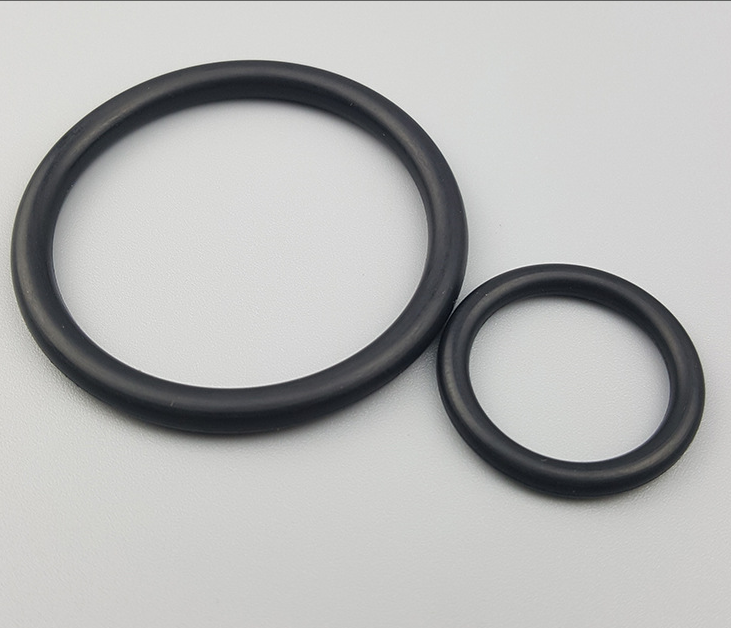
Poor Low-Temperature Performance:
The glass transition temperature of standard fluorocarbon rubber is approximately -20°C. At this temperature, it hardens and loses elasticity, leading to seal failure. Special grades (such as low-temperature fluorocarbon rubber) can improve performance to -40°C or lower, but at a higher cost.
Poor elasticity:
Compared to nitrile rubber (NBR) or silicone rubber (VMQ), it has relatively poor rebound and flexibility.
Poor resistance to certain chemicals:
It is not resistant to strong alkalis (such as sodium hydroxide), ammonia water, hot water, and high-pressure steam (especially steam above 160°C). It is not resistant to ketones (e.g., acetone), esters (e.g., ethyl acetate), ethers, and certain polar solvents.
Higher cost:
The cost of raw materials and manufacturing processes is high, resulting in a price significantly higher than that of general-purpose rubbers such as NBR and EPDM.
The glass transition temperature of standard fluorocarbon rubber is approximately -20°C. At this temperature, it hardens and loses elasticity, leading to seal failure. Special grades (such as low-temperature fluorocarbon rubber) can improve performance to -40°C or lower, but at a higher cost.
Poor elasticity:
Compared to nitrile rubber (NBR) or silicone rubber (VMQ), it has relatively poor rebound and flexibility.
Poor resistance to certain chemicals:
It is not resistant to strong alkalis (such as sodium hydroxide), ammonia water, hot water, and high-pressure steam (especially steam above 160°C). It is not resistant to ketones (e.g., acetone), esters (e.g., ethyl acetate), ethers, and certain polar solvents.
Higher cost:
The cost of raw materials and manufacturing processes is high, resulting in a price significantly higher than that of general-purpose rubbers such as NBR and EPDM.