Français

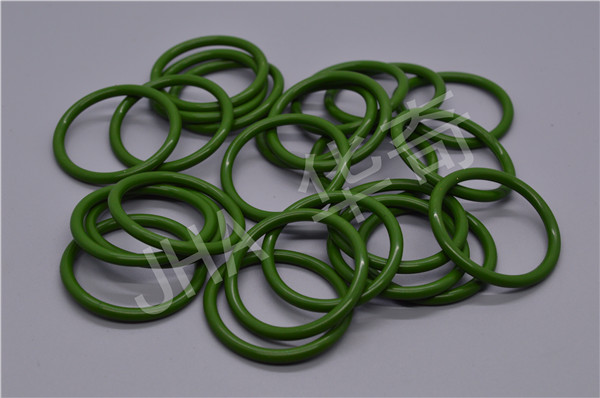
Surface treatment of qualified metal parts, adhesive surface can be applied to the glue, the method of brush coating, spraying, roller coating, knife scraping, dipping and so on. In the rubber industry due to the size of the products are generally smaller, so brush coating is more commonly used, the method is simple, does not require large-scale equipment, easy to operate, without the need for specialized training of operators, especially for the more complex shape of the parts more suitable. In the large-scale production line is best to use spraying or dip routing, the method of sizing efficiency is very high, but the equipment investment is larger.
The amount of adhesive sizing and its concentration, the number of sizing related to the two can be adjusted with each other. To achieve a certain thickness of the adhesive layer, the concentration of low need to apply more, high concentration can be less. But the concentration is too large sizing difficulties, and the adhesive layer is easy to foam, thus affecting the adhesive force. Concentration is too low in addition to the number of times due to the application of glue bow | blistering from the surface of the adhesive layer affects the adhesive force, but also a waste of solvent and labor. The more appropriate concentration of 20 ~ 35%, glue 2 ~ 3 times, special circumstances can also be dealt with.
In terms of brushing, the direction of brushing is best to cross longitudinally and horizontally to obtain a more uniform layer of glue. Each time you brush, you need to dry or even dry (except for solvent-free adhesives), so that the solvents in the adhesive are fully evaporated, which is conducive to improving the adhesive strength. If there is solvent residue, when the product is vulcanized, the solvent will enter the rubber, affecting the quality of the rubber product and the cohesion of the adhesive layer. Solvent volatilization speed and glue temperature and relative humidity of the surrounding environment. High temperature, solvent evaporation fast, the rubber layer is easy to bubble; low temperature solvent evaporation slow, sizing time is long, reducing production efficiency. Therefore, the sizing temperature - general control at 15 ~ 35 ° C is appropriate, relative humidity below 70%. Banyan volatile heat absorption, resulting in a rapid decline in the surface temperature of the applied glue, high humidity is easy to form a "dew", some of the adhesives that are afraid of water, such as isocyanates, isocyanate group is very easy to hydrolyze, and such as resorcinol formaldehyde resin adhesive moisture absorption is serious. For the vast majority of adhesives for the application of humidity more or less will reduce the adhesive force, but there are individual exceptions, such as silane coupling agent and room temperature vulcanization of one-component organosilicon adhesive, their adhesion and vulcanization need to be sufficient moisture in the air, otherwise it will affect the adhesive strength.
The amount of adhesive sizing and its concentration, the number of sizing related to the two can be adjusted with each other. To achieve a certain thickness of the adhesive layer, the concentration of low need to apply more, high concentration can be less. But the concentration is too large sizing difficulties, and the adhesive layer is easy to foam, thus affecting the adhesive force. Concentration is too low in addition to the number of times due to the application of glue bow | blistering from the surface of the adhesive layer affects the adhesive force, but also a waste of solvent and labor. The more appropriate concentration of 20 ~ 35%, glue 2 ~ 3 times, special circumstances can also be dealt with.
In terms of brushing, the direction of brushing is best to cross longitudinally and horizontally to obtain a more uniform layer of glue. Each time you brush, you need to dry or even dry (except for solvent-free adhesives), so that the solvents in the adhesive are fully evaporated, which is conducive to improving the adhesive strength. If there is solvent residue, when the product is vulcanized, the solvent will enter the rubber, affecting the quality of the rubber product and the cohesion of the adhesive layer. Solvent volatilization speed and glue temperature and relative humidity of the surrounding environment. High temperature, solvent evaporation fast, the rubber layer is easy to bubble; low temperature solvent evaporation slow, sizing time is long, reducing production efficiency. Therefore, the sizing temperature - general control at 15 ~ 35 ° C is appropriate, relative humidity below 70%. Banyan volatile heat absorption, resulting in a rapid decline in the surface temperature of the applied glue, high humidity is easy to form a "dew", some of the adhesives that are afraid of water, such as isocyanates, isocyanate group is very easy to hydrolyze, and such as resorcinol formaldehyde resin adhesive moisture absorption is serious. For the vast majority of adhesives for the application of humidity more or less will reduce the adhesive force, but there are individual exceptions, such as silane coupling agent and room temperature vulcanization of one-component organosilicon adhesive, their adhesion and vulcanization need to be sufficient moisture in the air, otherwise it will affect the adhesive strength.