Français

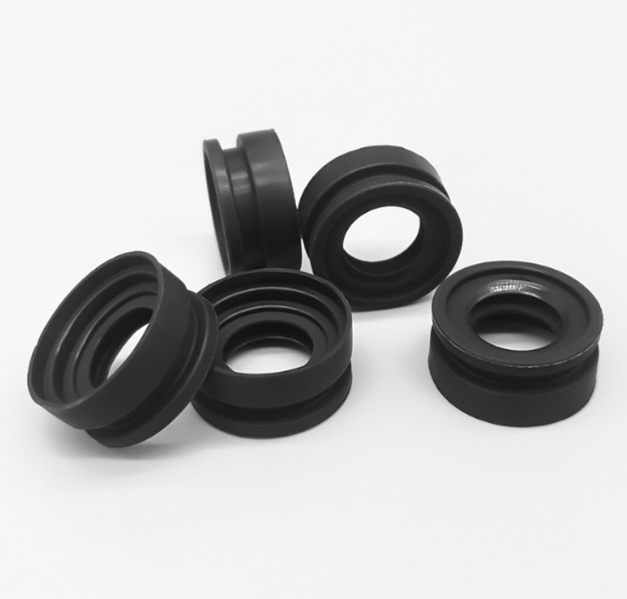
Vulcanisation pressure is the pressure that the rubber product is subjected to in the mould during vulcanisation. It has an important effect on the geometric size, structural density and physical and mechanical properties of the product. Vulcanising pressure in the vulcanising process plays a multifaceted role: to ensure that the geometric dimensions and structural density of the rubber product, so that the product is more dense, uniform. Promote the flow of rubber materials and morphological changes, improve the quality of vulcanisation and mechanical properties. Make the rubber material flow in the mould cavity, full of grooves (or pattern), to prevent bubbles or lack of rubber phenomenon. Improve the densification of the rubber material, enhance the adhesion strength of the rubber material and the cloth layer or metal, and help to improve the physical and mechanical properties of the rubber material (such as tensile properties, abrasion resistance, flexural resistance, ageing resistance, etc.).
(e.g. tensile properties, abrasion resistance, flexural resistance, ageing resistance, etc.). However, too high a vulcanising pressure may lead to defects such as burnt rubber surfaces and porosity, which may adversely affect the properties of the product. In practice, the three elements of vulcanisation can be adjusted and optimised according to the characteristics of the rubber material and the requirements of the product. For example, for thin rubber products, a higher vulcanisation temperature and lower vulcanisation pressure can be used to shorten the vulcanisation time; for thick rubber products, it may be necessary to reduce the vulcanisation temperature, increase the vulcanisation pressure and extend the vulcanisation time. In addition, vulcanisation time can be further reduced and vulcanisation efficiency improved by adding vulcanisation accelerators, for example.
(e.g. tensile properties, abrasion resistance, flexural resistance, ageing resistance, etc.). However, too high a vulcanising pressure may lead to defects such as burnt rubber surfaces and porosity, which may adversely affect the properties of the product. In practice, the three elements of vulcanisation can be adjusted and optimised according to the characteristics of the rubber material and the requirements of the product. For example, for thin rubber products, a higher vulcanisation temperature and lower vulcanisation pressure can be used to shorten the vulcanisation time; for thick rubber products, it may be necessary to reduce the vulcanisation temperature, increase the vulcanisation pressure and extend the vulcanisation time. In addition, vulcanisation time can be further reduced and vulcanisation efficiency improved by adding vulcanisation accelerators, for example.