Français

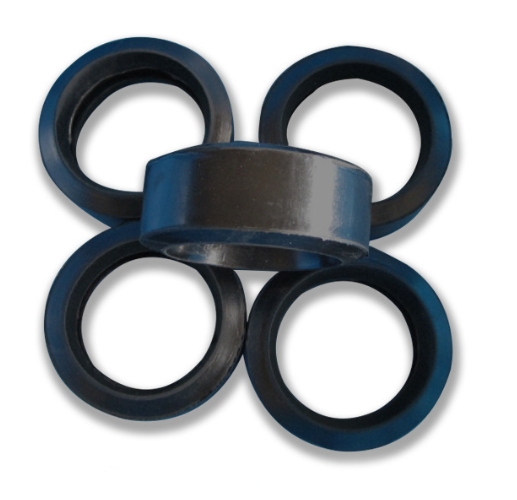
Butyl rubber is a kind of synthetic rubber, synthesized from isobutylene and a small amount of isoprene. The finished product is less prone to air leakage and is generally used to make inner tubes for automobile and airplane wheels. Butyl rubber is a copolymer of isobutylene and isoprene, which was put into industrial production in 1943. It has good chemical stability and thermal stability, and the most prominent is the air and water tightness. Its air permeability is only 1/7 of natural rubber, 1/5 of SBR, while the permeability to steam is 1/200 of natural rubber, 1/140 of SBR, so it is mainly used in the manufacture of various inner tubes, steam hoses, water tires, dam bottoms and gaskets and other rubber products.
The biggest advantage of butyl rubber: good air tightness. It is also heat-resistant, ozone-resistant, aging-resistant, chemical-resistant, and shock-absorbing, electrical insulation properties. Disadvantages:Slow vulcanization, poor processing performance. At present, there are six or seven kinds of domestic butyl reclaimed rubber production process, mainly steaming method, frying method, extrusion method, microwave method, radiation method, high-temperature continuous catalytic method, chemical mechanical method, etc., but no matter what method is used, the purpose is to use the most economical, the most scientific method of waste butyl rubber by the mesh structure into a linear structure.
The biggest advantage of butyl rubber: good air tightness. It is also heat-resistant, ozone-resistant, aging-resistant, chemical-resistant, and shock-absorbing, electrical insulation properties. Disadvantages:Slow vulcanization, poor processing performance. At present, there are six or seven kinds of domestic butyl reclaimed rubber production process, mainly steaming method, frying method, extrusion method, microwave method, radiation method, high-temperature continuous catalytic method, chemical mechanical method, etc., but no matter what method is used, the purpose is to use the most economical, the most scientific method of waste butyl rubber by the mesh structure into a linear structure.